
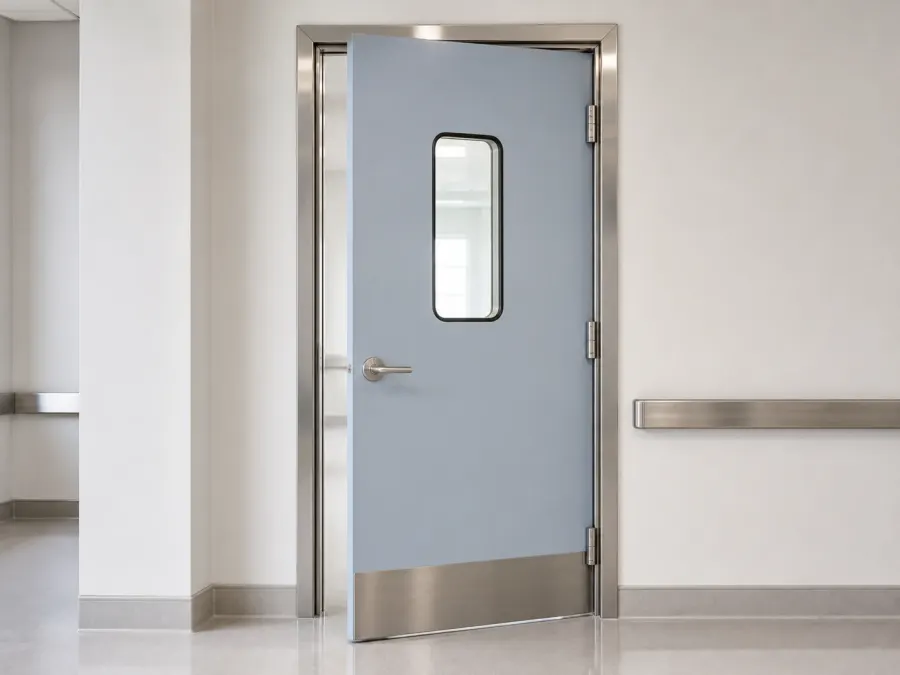
In healthcare buildings with heavy foot traffic, a door's surface, mechanism and durability are a quiet part of infection control. We compiled the criteria for choosing the right hospital door.
Hospitals are buildings that require different hygiene levels — from outpatient clinics to intensive care and sterile areas. In these environments doors are constantly exposed to contact and cleaning chemicals; therefore smooth, non-porous and easy-to-clean surfaces are a fundamental requirement of infection control.
90° hinged hospital doors offer ease of use in narrow corridors while withstanding heavy stretcher and equipment traffic thanks to a robust hinge system and impact protection plates. Vision panels support safe passage, while a lead-lined (X-ray) model option provides protection in radiology areas.
Details matter as much as material choice: joint-minimizing construction, antibacterial coating and easily disinfectable surfaces reduce microbial buildup. Long service life and low maintenance needs support operational continuity.
When the right door combines hygiene and durability, it contributes to both patient safety and operational efficiency.